
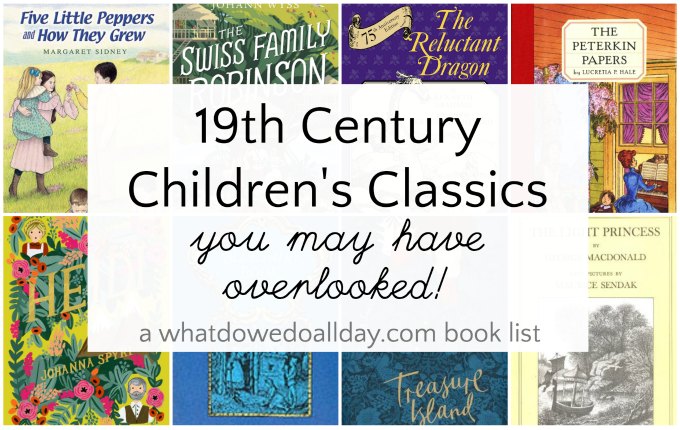
Many parents want to read what they consider to be "Classic Children's Books." These 19th century children's books are certainly classic! It is rather difficult to make a list of 19th century books that you haven't heard of. After all, there are only so many 100+ year old books that are still worth reading to your children! That said, I have left off the major contenders. So, I've created a list of 10 books from the 1800s which go beyond well-known names like Alice, Jo March or Tom Sawyer and Huck.
(Note: this post contains affiliate links that earn from qualifying purchases.)
It's likely that most children (and parents, too) will find the syntax and vocabulary of older books a little more challenging than their contemporary counterparts. Here are a few tips to help you get over that hurdle:
- Start with an adventure book. You might notice that my list is heavy on adventure and fairy tales: Verne, Stevenson, Kipling, for example. That is because I think these books are especially suited to appeal to today's children. The language, vocabulary and sentence structure may be unfamiliar to children used to contemporary children's literature, but an exciting, suspenseful plot can help to overcome that hurdle.
- Don't be afraid to start out with an abridged edition. Normally I am not pro-abridged books, but I also think abridged versions can whet the appetite of younger children, who will then be eager to pick up the full length book when they are older.
- Read aloud. All of these books are wonderful to read aloud together. Several of the books have chapters which can function as discreet stories so you can "test" the book out to see if it is age appropriate. Most of these should be fine as read alouds for ages 7 and up.
- Watch the movie. Many of these books have movie versions. I am not a person who thinks the book is always better than the movie, they're just different forms, that's all. I do think that it's better to read the book first, but if your child has already seen the movie and liked it, it's a great segue into the book!
- Address problematic ethnic representations head on. The sad truth is that many books we consider "Classics" contain racist elements. Several of the books I've listed have this problem. I recommend using the book as a springboard for discussion. A great article that addresses this is How to Really Read Racist Books to Your Kid.
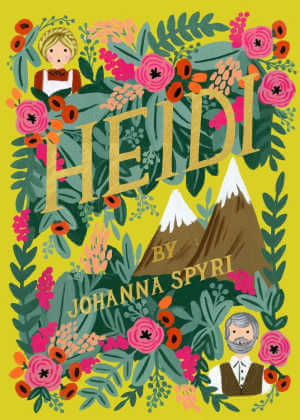
Heidi by Johanna Spyri (1880)
Five-year-old Heidi is sent to live with her hermit grandfather in the Swiss Alps. She charms everyone, of course. I loved this book when I was a kid. It is completely responsible for my life-long romanticization of melted cheese for dinner.
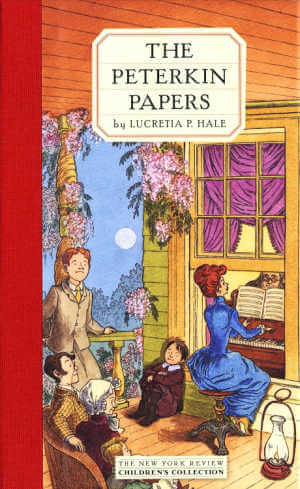
The Peterkin Papers by Lucretia P. Hale (1880)
The amusing adventures and foibles of the rather foolish, but lovable New England family. Most of the chapters read like discreet stories and will provide a nice chuckle for you and your kids before bedtime.
MORE: Favorite classic books to read aloud
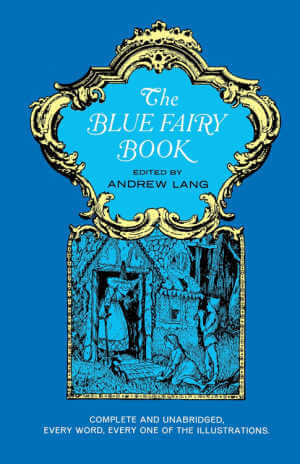
The Blue Fairy Book by Andrew Lang (1889)
This is a 19th century classic collection of old-fashioned fairy tales. Some will be very familiar, some will be new to you. For your reading enjoyment there are other "color" fairy books, too!
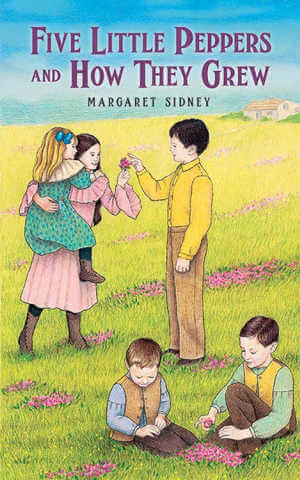
Five Little Peppers and How They Grew by Margaret Sidney (1881)
The adventures of an impoverished family with lots of children who go to live with a rich family. There are a lot of lessons about hard work and honesty. I remember reading a battered copy from the 1930s when I was a kid. If you enjoy this one, Sidney wrote a number of books about the family.
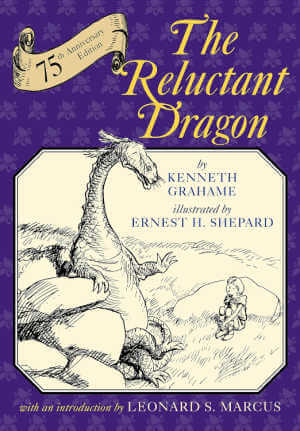
The Reluctant Dragon by Kenneth Grahame (1898)
Most people know Grahame's other book, The Wind in the Willows, but this short novel is also charming. A boy befriends a poetry loving dragon in the caves near his village. When the rest of the villagers learns of the dragon, they assume he is a threat and enlist St. George to rid them of the beast. Instead the boy, dragon and St. George successfully conspire to bring everyone together and show the villagers that their prejudice is misplaced
MORE: Dragon books and series for tweens
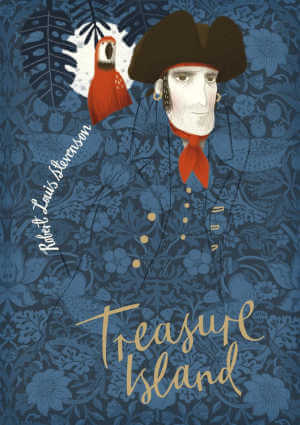
Treasure Island by Robert Louis Stevenson (1883)
It is safe to say that the characters in this book are not all virtuous, hard working and self-sacrificing, but it is loads of fun. Youngster Jim goes to look for treasure and gets mixed-up with pirates like the ruthless Long John Silver.
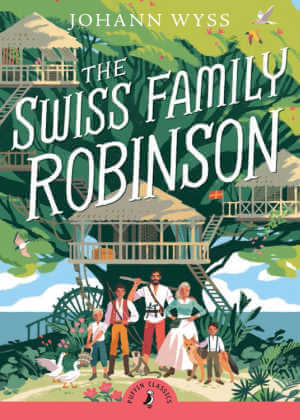
The Swiss Family Robinson by Johann D. Wyss (1812)
Wyss's book has the distinction of being the earliest book on this list. A family is stranded on a deserted island (fortunately with an entire ship's worth of goods, so they can kit out their tree house in style) and must learn to cope with their new surroundings. There is a lot in here to keep nature lovers interested, and a fun read in tandem with watching the beloved Disney movie.
MORE: Big list of adventure novels for kids
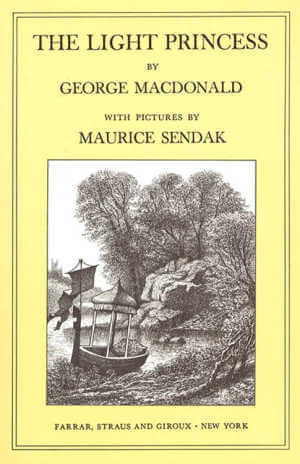
The Light Princess by George MacDonald. (1864)
MacDonald was a Scottish author who is less well known on this side of the Atlantic.There were a lot of choices for a MacDonald book, I chose this one because you can get an edition illustrated by the beloved Maurice Sendak. A Princess, cursed at birth to have no gravity, spends her days floating until she discovers that her gravity returns only when she is in the water. Try The Princess and the Goblin or The Golden Key next.
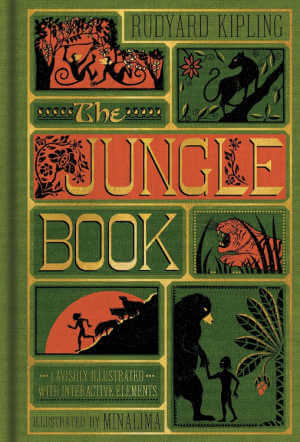
The Jungle Book by Rudyard Kipling. (1894)
Kipling's work is a collection of original fables inspired by the author's childhood in India. Each chapter is its own exciting adventure. The stories make marvelous read alouds. Kipling also wrote The Second Jungle Book, which has more Mowgli (the boy who was raised by wolves) stories than the first. The version I've linked to has fun illustrations and great 3D interactive elements like spinners and fold-out maps.
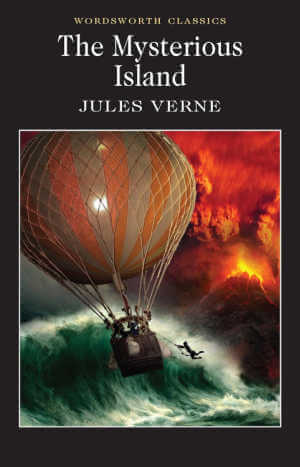
The Mysterious Island by Jules Verne (1874)
I had a difficult time choosing the Verne book to include. All are very exciting, suspenseful adventures. I chose The Mysterious Island mainly because it is lesser known than Twenty Thousand Leagues Under the Sea (it's also a sequel of sorts to this novel) and Around the World in Eighty Days. A gang of characters escape from a Civil War prison via hot air balloon and find themselves stranded on an island where strange things happen. Science fiction fans will love it. Note that the movie of 20,000 Leagues Under the Sea contains scenes from The Mysterious Island.
Have you read any of these books with your children? What are your favorites from the 19th century?
Visit my other posts in this series:
- Classic Children's Books: 1900s
- Classic Children's Books: 1910s
- Classic Children's Books: 1920s
- Classic Children's Books: 1930s
- Classic Children's Books: 1940s
- Classic Children's Books: 1950s
- Classic Children's Books: 1960s
- Classic Children's Books: 1970s
- Classic Children's Books: 1980s
- Classic Children's Books: 1990s

Jennifer says
I read Treasure Island to my son (aged about nine when we read it) and he loved it. Some of the nautical terms are disorienting, so we looked up a ship's layout online. I also tried The Jungle Book later that summer, but with bored response. We never got beyond the first chapter.
Momand Kiddo says
I know what you mean about the nautical terms! Boats have never been a big vehicle interest around here. We are also reading Swallows and Amazons and the first three chapters are filled with unfamiliar boat part descriptions. We had to look almost all of them up!
Fanny Harville says
We are reading 20,000 Leagues Under the Sea aloud right now and our 8-year-old loves it, but I am just dying reading the long latinate catalogs of sea creatures in just about every chapter. I'd have been happy with an abridgement, but our son loves it!
The Five Little Peppers and How They Grew is an all-time favorite of ours, and one of the first long chapter books we read (first we read an illustrated abridgement, then the real thing). But we never made it past the first couple chapters of the sequel.
We made it about halfway through Hans Brinker but stopped after getting bored with the didactic Dutch history lessons that dominate the middle of the book.
This is a great list, and I love Project Gutenberg texts! Smartphone or Ipad users can read Project Gutenberg texts easily from their devices with the MegaReader app, which I especially like for reading aloud on car trips after dark (before my night-owl child falls asleep).
Momand Kiddo says
I completely agree about Hans Brinker! I remember thinking I should add to my blurb: "Feel free to skip the boring parts."
Chrissy @ The Outlaw Mom Blog says
What a great list - reminds me of what I read during my own childhood and got me wondering whether my own kids would ever be exposed to this literature if I don't introduce it. Thanks for reminding me of these great books! And I am not pro-abridged versions either, but I do think it's helpful for the very little ones and the early readers so they can actually make it through the book.
Momand Kiddo says
Most of these books I read on my own as a kid (a few not until I was an adult). But I think a lot of other classic literature (Like Tom Sawyer and Huck Finn) is certainly still part of school curricula, so that's good.
Raising a Happy Child says
The Mysterious Island was one of my absolute favorites when I was a child, but I was about 10. So far we read The Jungle Book and Around the World in 80 Days (abridged) from your list.
Amy says
This is a great list! My oldest is only four, so we've been choosing simpler stories than these, but I'll reference this list in the future!
Momand Kiddo says
I hope you stay with us over the next few months because we'll be looking at books for each decade in the 20th C.
Momand Kiddo says
Also, check out our list of over 50 chapter books for preschoolers, you might find something there that's more age appropriate.
Jen says
7 Little Australians by Ethel Turner was one of my favourite books when I was around 8-10, I'm not sure how well known it is outside of Australian though. I also absolutely loved Huckleberry Finn and read and re-read it for years until well into secondary school.
Momand Kiddo says
I think it's safe to say 7 little Australians is not very well known here. I checked and it's not in our library, but the good news is that I found it at Project Gutenberg. I love that you keep telling me about these Australian books.
Nancy Richards says
Wonderful site. After exhaustive searching, I'm reaching out to those of you who have more knowledge. I've come across a piece of fabric with the sweetest young hedgehog that I know is from a children's book. He looks so familiar to me, but I can't remember. He wears clothes, carries a stuffed bunny, reads a book to it, plays with a toy train, he naps, likes Lollypops and enjoys standing in his coat watching the snow. The fabric is a rich beige. The clothing is colored with muted but rich green red and gold. The hedgehog face is black line drawing. I could send a pic if I could email it.
Erica MomandKiddo says
I'm so sorry, that does not sound familiar to me.
Kate Wilson says
Sounds like it could be “Fuzzypeg the Hedgehog.” Several stories by Alison Uttley with pictures by Margaret Tempest...
Barbara Bell says
Thanks for doing this project! I'm finding it 4 years later and wonder what you have been doing since?
Johanne Hebert says
What fun to read your lists - so many of my favourites and a few new ones. I appreciate that you must be highly selective, with a maximum of 10 titles, but hope you will publish more lists like these. For the 19th century I would include Five Little Peppers, by Margaret Sidney, and Mary Louisa Molesworth's The Cuckoo Clock or one of her other classic titles.
Hannah says
Two Little Waifs by Mrs Molesworth is beautiful
Jen @ Bookish Family says
Wow! We have read and loved all of these, except The Mysterious Island. But you didn't include any Howard Pyle on your list . . . Men of Iron, The Merry Adventures of Robin Hood, and The Wonder Clock are a few from the 1800s that we particularly love. I put a list together of free illustrated editions here http://bookishfamily.blogspot.com/2018/04/free-howard-pyle-books-illustrated-google-books.html
Erica says
I have Howard Pyle on the next list. 😉
Kendra says
Henry... the only one we've gotten through so far was The Cat of Bubastes. And Ballantyne's The Coral Island. Coral Island had much of the ship talk others mentioned & we did very much the same of looking terminology up. I have also personally never had much of a love or fascination with the sea but this book in particular really began to developed in me such. Both authors have multiple titles that friends have recommended but we just simply haven't gotten around to. Thank you for this article & others on 20th century literature 😃
Kendra says
Oops, didn't proofread... Henry should be Henty!
😅