
Representation in books matters. But not only that, representation in good books matters! This list of picture books not only present stories of children with disabilities, or "differently abled," if you prefer, in a positive light, but are beautifully illustrated and rise above didacticism.
As you spend time reading these books with your children, make sure to start a conversation about what it is like to live with a disability, and how ableism impacts all children, and not just those with a disability.
(Note: this post contains affiliate links that earn from qualifying purchases.)
Every collection of diverse picture books must include a wide range of children with different skills and abilities, and you''ll understand I haven't been able to cover every disability on this list.
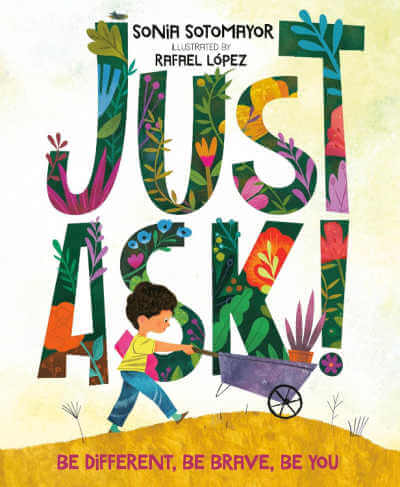
Just Ask! Be Different, Be Brave, Be You by Sonia Sotomayor, illustrated by Rafael López. Sotomayor's book normalizes kids' curiosity about the differences they may see in others and encourages them to be curious and, "Just ask." Each double page spread introduced a child working in a garden who a different disability or illness, like type 1 diabetes (Sotomayor's disability), asthma, ADHD, etc. I also enjoyed her follow-up book, Just Help! How to Build a Better World.
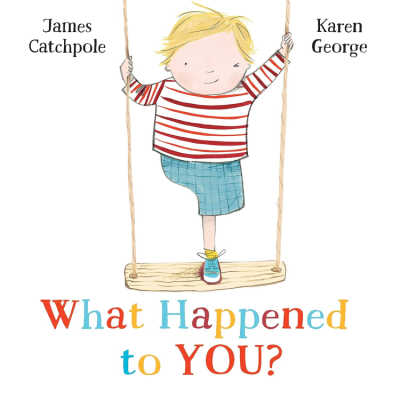
What Happened to You? by James Catchpole, illustrated by Karen George. With humor, charm, and a huge imagination, a boy answers the question, "What happened to your leg?" Endnotes provide parents and caregivers information on how to handle curious questions with empathy.
MORE: Picture books to teach empathy and compassion
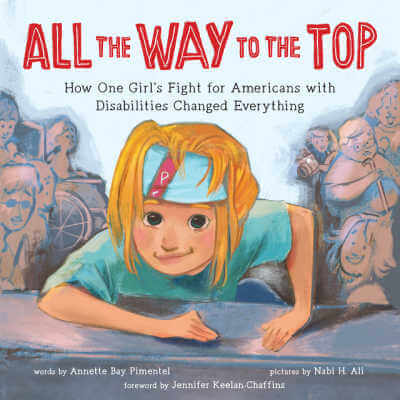
All the Way to the Top by Annette Bay Pimentel, illustrated by Nabi H. Ali. In this picture book biography, 8-year-old Jennifer Keelan, born with cerebral palsy, fights to secure passage of the Americans With Disabilities Act. All her life, Keelan has persevered to join in activities, even when others told her she couldn't do it. When politicians ignore Keelan and her fellow activists, she climbs the steps of the Capitol, even though it means crawling the entire way. Although the ADA is a big step forward for inclusion for people with disabilities, the text acknowledges that more work is needed.
MORE: Picture books about perseverance
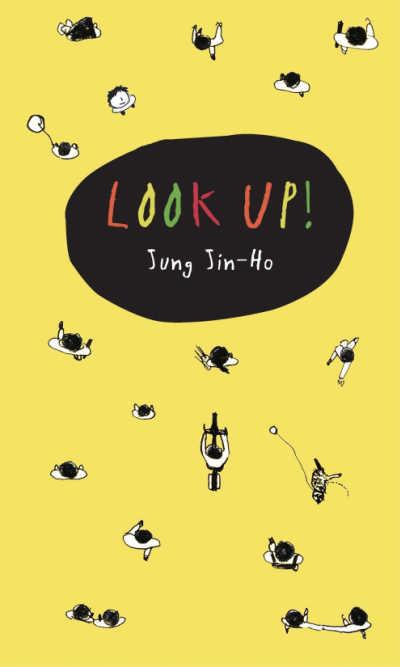
Look Up! by Jung Jin-Ho. A girl in a wheelchair gazes over her balcony onto the sidewalk below. She calls to the passersbys to “Look up!,” but they ignore her cries until one young boy looks up, and then lies down in order to look up at her. This is such an unusual and interesting book. Kids will love talking about both the perspective of the girl and the people on the sidewalk, as well as how being aware of our surroundings will help us see how to be generous to others.
MORE: Books About Perspective and Observation
A Friend for Henry by Jenn Bailey, illustrated by Mika Song. Henry, coded as autistic, looks about his classroom, he notices all the details about the objects and his fellow classmates. He is looking for a friend and wonders how he will fit in. As he tries to find a child to be his friend, there are some misunderstandings and set-backs, and a bit of sensory overload at times. All children will recognize the challenges and rewards that come with learning how to be a friend.
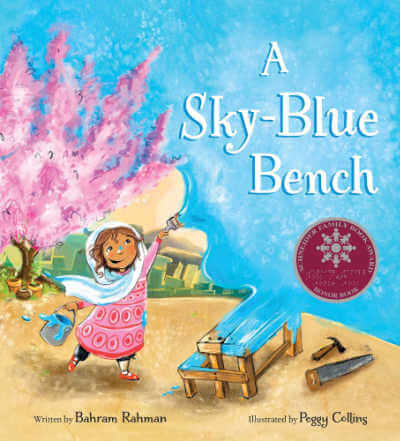
A Sky-Blue Bench by Bahram Rahman, illustrated by Peggy Collins. Aria, who lives in Afghanistan, has a prosthetic leg which prohibits her from sitting in the same manner as the rest of her classmates. But she is determined not to let that stop her from joining school lessons. A bench would allow her to sit comfortably, but since there is no money to purchase a bench, Aria must come up with a creative solution. A wonderful book about working within the constraints of hardships, community support and perseverance.
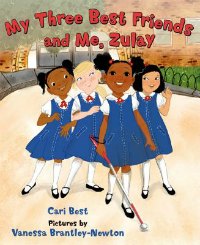
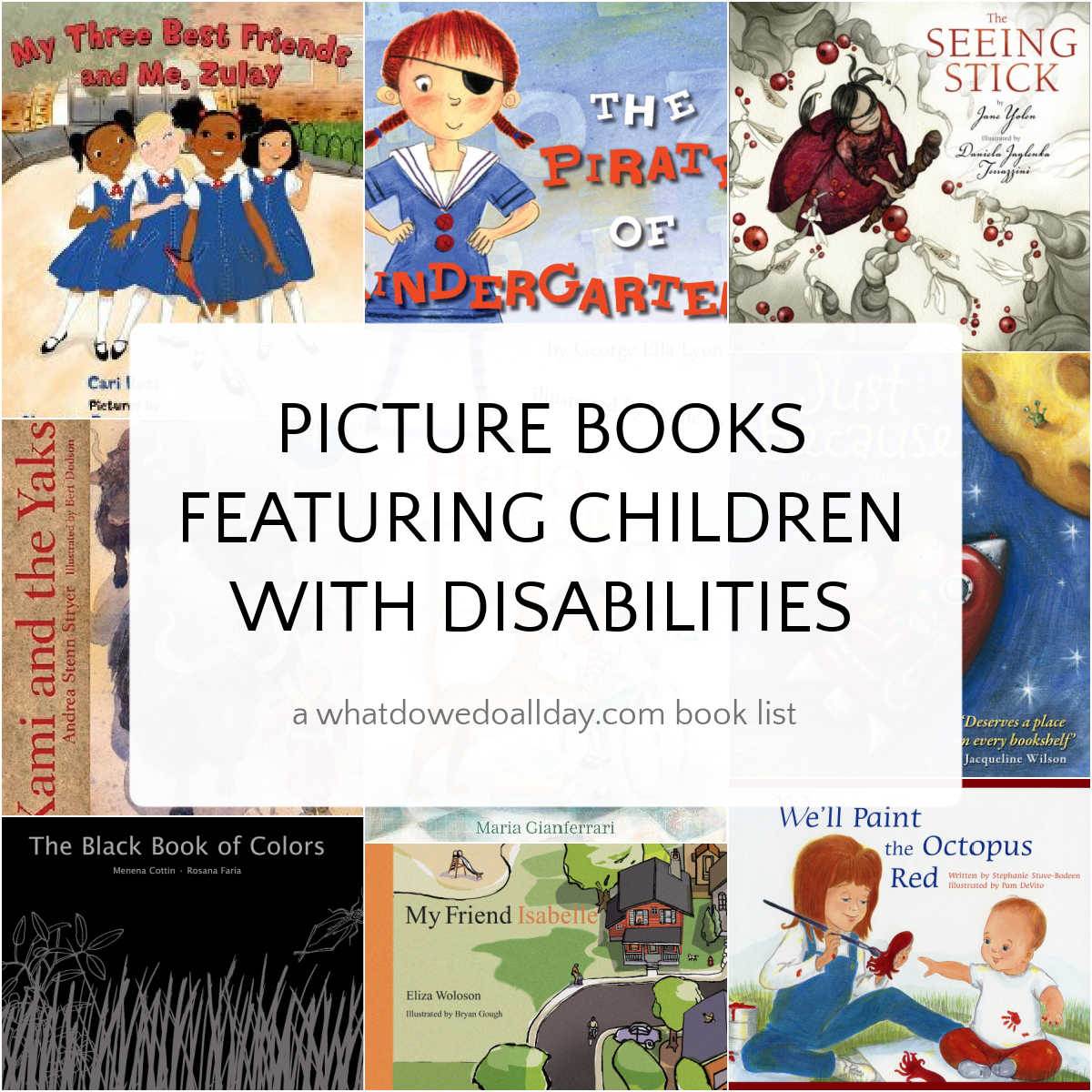
My Three Best Friends and Me, Zulay by Cari Best, illustrated by Vanessa Brantley-Newton. Zulay, who is blind, enjoys going to school with her diverse group of friends, but what she doesn't like are the special lessons she must have in order to learn how to use her cane. When news of field day arrives, the possibility of participating in a race is just the motivation Zulay needs.
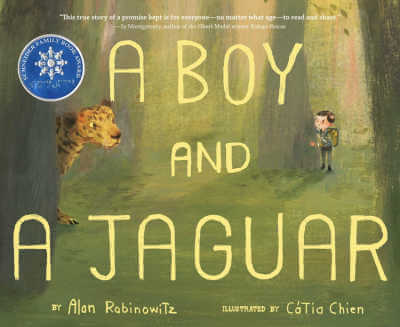
A Boy and His Jaguar by Alan Rabinowitz, illustrated by Cátia Chien. Author Rabinowitz, whom Time magazine called "the Indiana Jones of wildlife conservation", struggled as a boy with a speech impediment. He wanted desperately to overcome his stutter and speak like everyone else so he makes a promise to a jaguar at the zoo. In college he learns how to control his stutter but it isn't until he finds a way to help the jaguars and other wildlife that he feels whole.
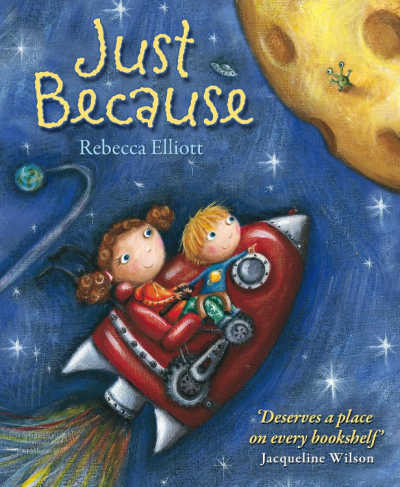
Just Because by Rebecca Elliot. A boy describes all the things that his sister, who is strapped into a wheelchair, enjoys or does not enjoy. After each item, he explains, "Just because." He doesn't use her disability as an excuse or a reason, he simply accepts her for who she is. Colorful illustrations show the two siblings engaging in everyday activities and pretend play.
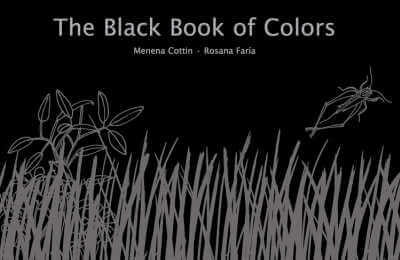
The Black Book of Colors by Menena Cottin. This is such an interesting and unusual book. There are in fact, no colors – or rather, no colors in the way seeing people think about colors. Each page is black, but the words and textures invite the reader to experience seeing colors as a blind person might experience them.
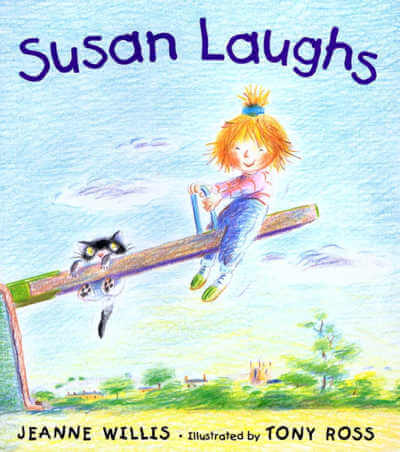
Susan Laughs by Jeanne Willis, illustrated by Tony Ross. When I started reading this book I wondered if I had checked out the right book, which speaks powerfully about its message. Simple text, such as "Susan swings... Susan swims ... Susan reads..." etc. is accompanied by the appropriate picture depicting Susan enjoying everyday life activities. We are given the entire book to learn about Susan and to identify with her, seeing her as "just like us". The image of Susan in a wheelchair at the end reinforces that living with a disability does not ... well... disable someone.
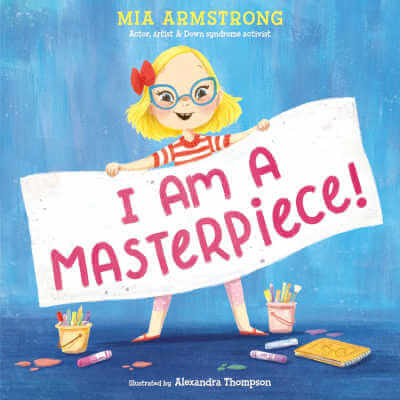
I Am a Masterpiece by Mia Armstrong, illustrated by Alexandra Thompson. Author Mia Armstrong is an actor, artist and Down Syndrome activist. In her book she explains how Down Syndrome has helped her to see the world in unique ways and given her the ability to express herself artistically.
MORE: Picture books to inspire artistic creativity
My Friend Isabelle by Eliza Woloson, illustrated by Bryan Gough. Isabelle has Down Syndrome but even though Charlie does not, the two are friends. Charlie narrates this sweet story and describes how the pair like to do a lot of the same activities, but they are also different kids with their own interests and personalities. The reader does not learn about Isabelle's Down Syndrome until the end of the book; the focus of the book is on the children's friendship.
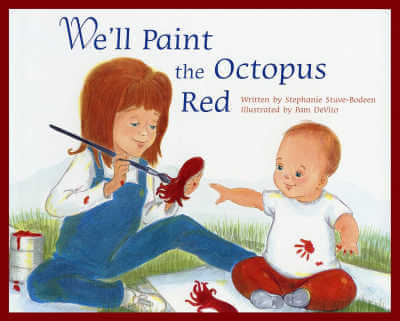
We'll Paint the Octopus Red by Stephanie Stuve-Bodeen, illustrated by Pam Devito. A young girl describes her anticipation surrounding the upcoming birth of her new brother. After spending time listing all the activities she looks forward to, like kicking a ball, going on a Safari, and more, she reveals that her father has told her that her brother might not be able to do everything as soon as she thinks. Her brother will be born with Down Syndrome. But then the father and daughter discuss all the amazing things her brother will be able to do.
MORE: Picture books that teach meaningful values
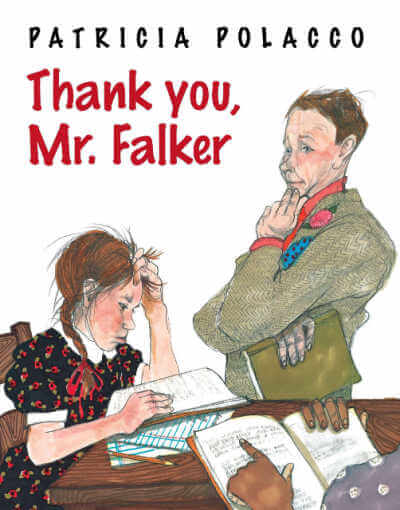
Thank You Mr. Falker by Patricia Polacco. Trisha, a girl with dyslexia, struggles with reading and writing, and desperately wants to learn. Her difficulties are compounded by taunts she endures from other children. She finally connects with a compassionate teacher, Mr. Falker, who sets her on the path to reading and teaches her how to see her gifts.
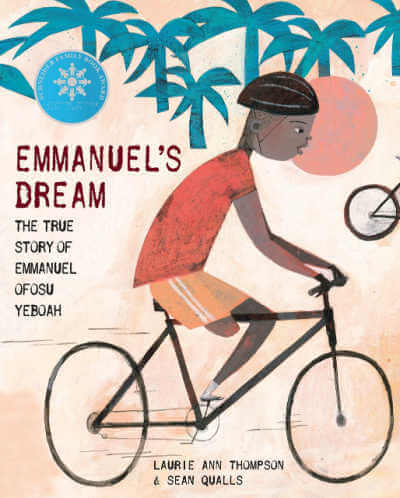
Emmanuel's Dream: The True Story of Emmanuel Ofosu Yeboah by Laurie Anne Thompson, illustrated by Sean Qualls. Emmanuel was born in Ghana with only one leg. Most children with disabilities didn’t go to school, but Emanuel was determined and hopped two miles each way to attend school. After his mother died, he decided to honor her last words by proving “that being disabled does not mean being unable.” He completed the astounding feat of bicycling 400 miles in 10 days.
MORE: Picture Books about Social Justice
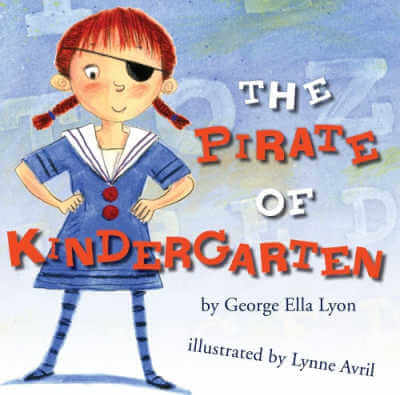
The Pirate of Kindergarten by George Ella Lyon, illustrated by Lynne Avril. Ginny loves books, and reading circle. But she has difficulty reading because she sees everything double. After the nurse discovers her condition during the school's vision screening day, the doctor prescribes an eye patch and Ginny embraces her new role as the pirate of kindergarten. While this is a story about a temporary disability it will help kids look at how differences come in all varieties and to embrace the uniqueness of all children.
MORE: Children's Books about Self-Esteem and Embracing Difference
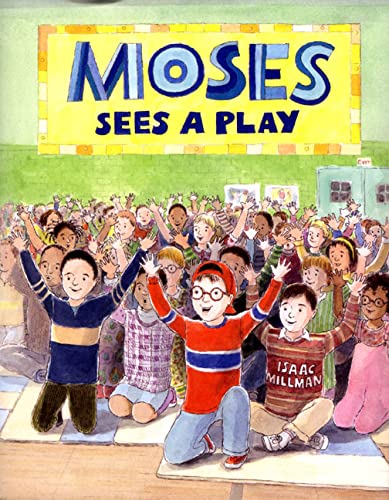
Moses Sees a Play (series) by Isaac Millman. I once had the great pleasure of seeing a performance given by the National Theater of the Deaf, and many theaters also provide interpreters during specific performances so non-hearing people can enjoy the magic of live theater. Moses is a student a a school for deaf children. After seeing a performance by The Little Theater of the Deaf, the class decides to put on a show of their own. Included in the book are wonderful descriptions of the performance action and how the actors use their bodies to convey meaning. In addition, the book is also written in sign language, and includes diagrams of signs, which teachers and parents can use to practice with their children.
MORE: Books about d/Deaf characters
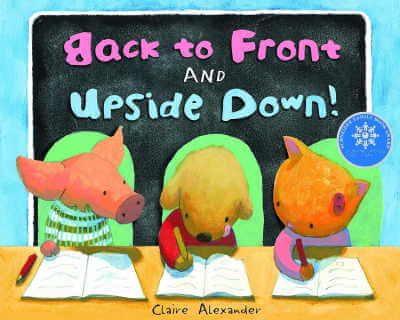
Back to Front and Upside Down by Claire Alexander. The class is making cards for their principal but Stan has trouble forming letters and his handwriting is all mushy and unreadable. While not identified, Stan shows signs of dysgraphia. He feels discouraged but doesn't know how to ask for help. Many parents children who struggle greatly with handwriting and this sweet book emphasizes the importance of getting help for one's struggles and giving oneself permission to take the time necessary to learn and accomplish one's tasks.
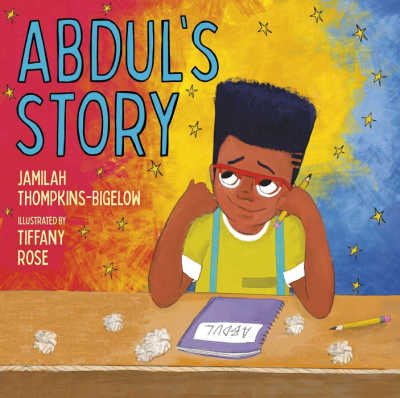
Abdul's Story by Jamilah Thompkins-Bigelow. Any child who has faced a challenge in school while watching their classmates perform a skill with ease will relate to Abdul's story. Abdul loves to tell stories but he struggles with writing. His letters never look the way they are supposed to and it takes so much energy out of him, he feels frustrated. During a class visit, an author shows Abdul his own messy notebook and Abdul tries a new way to turn his own writing, imperfect though it may be, into a story.
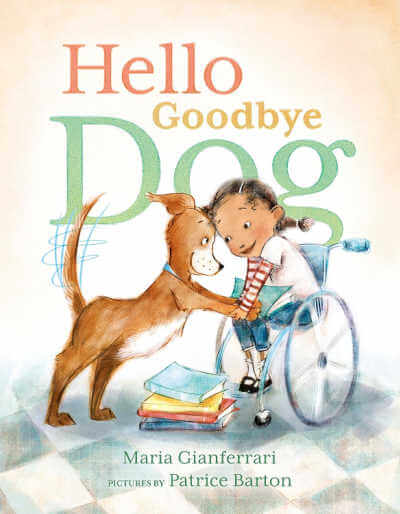
Hello Goodbye Dog by Maria Gianferrari, illustrated by Patrice Barton. Zara has a dog named Moose. Moose loves Zara so much he wants to go with her everywhere and follows her to school. Moose is not a service dog, but others see his potential as a good companion, and Moose goes through the training to become a therapy dog who can be welcomed at places like schools. Although Zara is in a wheelchair, the story isn't about her physical challenges, it is about the joy of friendship with a furry friend.
MORE: Picture Books to Welcome Everyone to School
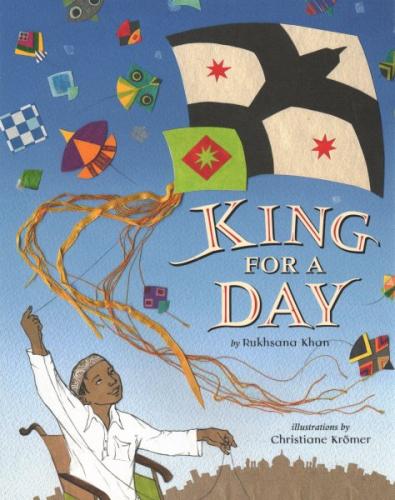
King for a Day by Rukhsana Khan, illustrated by Christiane Krömer. Malik is looking forward to flying his kite during the festival of spring. From his wheelchair on a rooftop, he flies it vigorously, battling the neighborhood bully. After the celebration, his compassion spurs him to help a girl with a kite escape from the same bully.
MORE: Picture books with Muslim characters
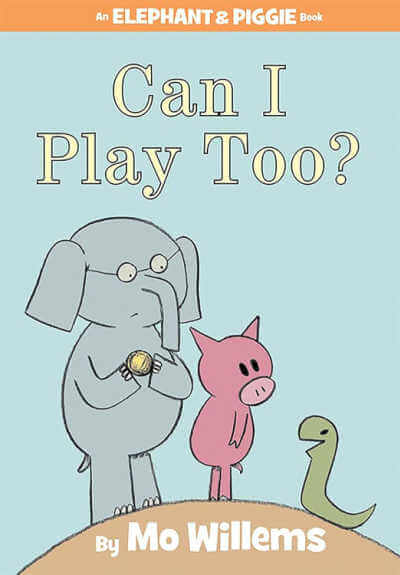
Can I Play, Too? by Mo Willems. Do worms, elephants and the porcine count as children? you be the judge. When I started reading books for this list, I didn't realize there was an Elephant and Piggie book about children learning to play with others who are differently abled. What happens when Piggie and Gerald play ball with a snake? As you might guess, a lot of learning and understanding. Great fun.
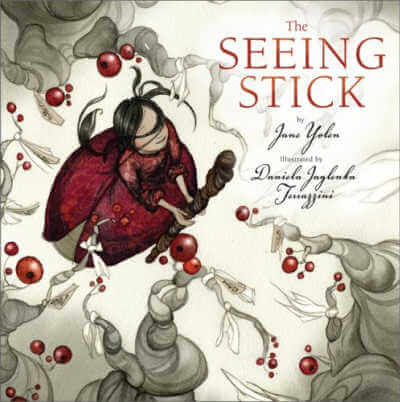
The Seeing Stick by Jane Yolen. Not all books about disabilities need to be contemporary stories! In this fairy tale-like story, the only daughter of the emperor in Peking is born blind. Hwei Ming's father feels great sadness at his daughter's blindness and he promises a reward to anyone who can bring her sight. Many men come to try, but they all fail to help Hwei Ming see. One day, an old man with a mystical seeing stick enters the city gates. The old man teaches not just Hwei Ming, but her father, how to "see." The glossy, embossed illustrations become more and more colorful as the story progresses. Lovely.
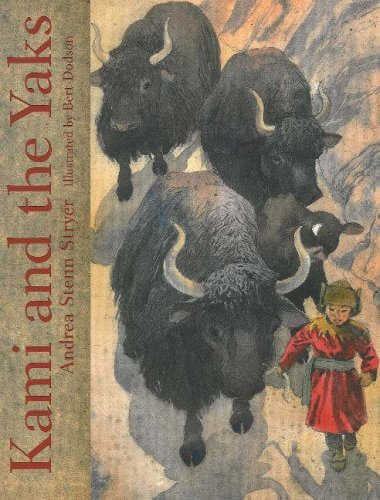
Kami and the Yaks by Andrea Stenn Stryer, illustrated by Bert Dodson. Kami lives with his Sherpa family on the high slopes of the Himalayan mountains. Kami tends to the yaks, and he is deaf. One day he blows his whistle for the yaks, but they do not come. As a storm approaches, he finds the yaks, but one of them is injured. Kami runs back to fetch help. His father, unable to understand because Kami cannot use words, becomes upset that Kami has returned without the yaks. But Kami is not deterred and he communicates with gestures until his brother figures out what is going on and the three of them rush to rescue the yaks. Gorgeous illustrations!

Danya Banya says
You should totally add Anna and her rainbow coloured yoga mats to this list. You don't find out until part way through the story that she's hearing impaired, and it's more just a casual reference that she wears a hearing aid, without focusing on it as a negative. http://www.kidsyogastories.com/product/anna-and-her-rainbow-colored-yoga-mats/. (I should mention that my friend is the author, but it is a fantastic book regardless!)
M says
This does look like a cute story. I'll have to point out a few things here: the correct term is "deaf" rather than "hearing impaired." Also, I'm trying to understand how deafness/wearing hearing aids would be viewed as negative.
Jennifer says
Laurie by Elfi Nijessen is also a great book about a little girl that is hearing impaired.
http://www.goodreads.com/book/show/8936793-laurie
Pat says
Please also add "How Katie Got a Voice (and a cool new nickname)" about a 4th grade girl who has severe disabilities and can't speak. Her new classmates want to be friends and include her in their activities but they don't know how. Once she is introduced to assistive technology, including a speech-generating device, the students realize that she can do everything they can do; she just does things differently. At the end of the story is a section on disability etiquette, written in kid-friendly terms. Autographed copies and more info available through http://www.patmervine.com. Reader's Theater script, extension activities, and German edition also available.
Erica says
Thanks for the suggestion.
Jennifer Poe says
We have enjoyed the "Disabilities and Differences " series ( We All Play, We All Learn, We All Read, etc.). They are non fiction and probably easy enough to be emerging readers. But they have pictures of disabled people doing regular activities and interspersed with non disabled people as well as pictures of disabled/non disabled people doing things together. There is vocabulary for equipment etc. They have helped spark my 5 year old's curiosity and helped me show that disabled people can and enjoy doing the same things as everyone else.
Erica says
Thank you for the recommendation!
Jade Maitre says
Fantastic article - thank you very much. These stories seem wonderful in every way. I've shared it on my Storyberries.com social media to help spread the word and encourage more readers of these brilliant books on diversity. Thanks again! Jade
Maggie Lantry says
I really do appreciate your taking time to make and share these book lists. However, can you put at least a
list of titles and the specific topic on a pdf list that can be downloaded and then copied to take along to the
library.
As I train child care - givers on a variety of issues. I would really like abbreviated lists to share.
Thanks so much, Maggie
Heather says
How Smudge Came
A Screaming Kinds of Day
- two more great titles
Adiba Nelson says
Here's another for you! "Meet ClaraBelle Blue" ! Great message of inclusion, fun, and the joy of childhood!
Melissa Hart says
Splendid list--thank you! May I add Avenging the Owl (Sky Pony, 2016) which includes a naturalist middle-grader who happens to have Down syndrome? Much gratitude!
Erica says
Thank you for the recommendation!
Robbin Miller says
Great diversity of books to offer to children. A beautiful website to promote your products. I wrote "Playgroup Time," which is the first picture book to promote diversity and inclusion at an early age. A wonderful cute picture book to promote in your list of books on Children with Special Needs.
Robbin Miller says
Great diversity of books to offer to children. A beautiful website to promote your products. I wrote "Playgroup Time," which is the first picture book to promote diversity and inclusion at an early age. A wonderful cute picture book to promote in your list of books on Children with Special Needs.
Cherina says
In Jesse's Shoes is a favorite of mine and Rolling Along with Goldilocks and the Three Bears is a classic with a disability twist.
Donna G Driver says
Please consider adding my middle grade novel No One Needed to Know to your list. It is about an 11-year-old girl deal with the pressures and responsibilities of having an older autistic brother. It has themes of bullying and special needs acceptance. The story is based loosely on my own experience as a sister of a brother with developmental disabilities. It was published by Schoolwide Inc. Zing! digital library and in print through Amazon and Ingram. It has won 3 literary awards this year for special needs awareness. I'd be happy to send you a copy to review.
Sharon says
I wish there had been at least one book about food allergies! It's probably one of the most common disabilities children face today.
Erica says
Good topic! I don't think I've come across a picture book about food allergies.
Ronda says
How much for all 18?
Jenny R says
Hi, please include the book "Meet Will and Jake, Best Buds Forever!" this book was written by a parent's group and our Infant Development Program. It features best buds who like a lot of the same things and each have their own interests and strengths. Will doesn't care if Jake has an extra chromosome. It explains a bit about Down syndrome, talks about inclusion, shares the message that we're all more alike than different, and reinforces an anti-bullying mentality.