

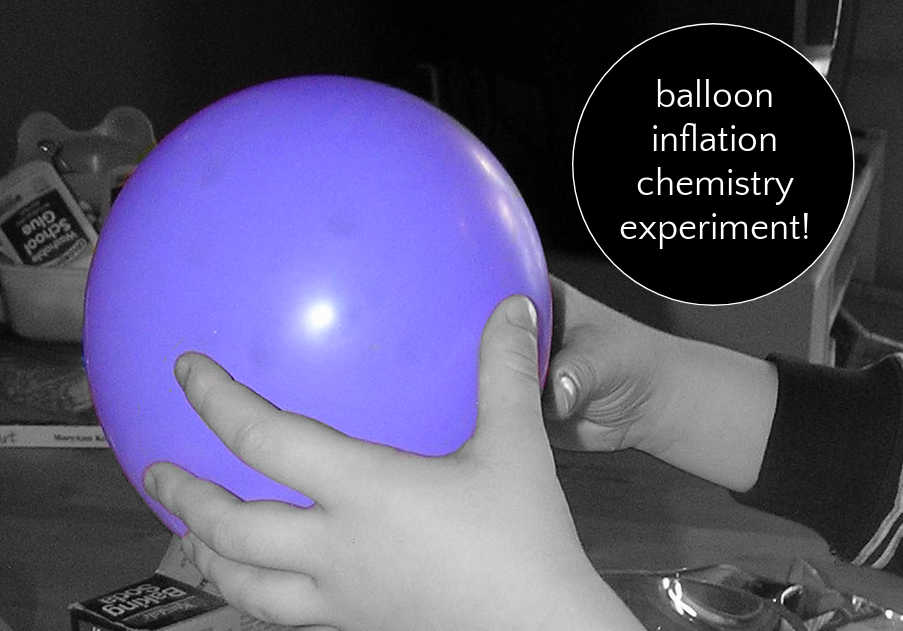
Sure, you could huff and puff to inflate a balloon but did you know you can blow up a balloon with chemistry? Not only is it possible, but you blow up a ballon with common household ingredients like yeast, baking soda and vinegar.
You just need to be able to produce the necessary carbon dioxide. We chose two different methods to perform this easy at home science experiment that will wow your kids. The first method uses yeast, and the second uses a mixture of baking soda and vinegar.
Table of contents
This simple experiment is a great boredom buster when you and the kids are stuck inside. When you are done, be sure to visit my giant list of Indoor Activities for Kids for more ideas.
MORE: This project would make a great addition to our DIY summer science camp!
How to Blow up a Balloon with Yeast
The first inflation experiment uses the same ingredients that make bread rise. The combination of yeast and sugar creates carbon dioxide, the gas that expands inside the balloon to "blow it up!"
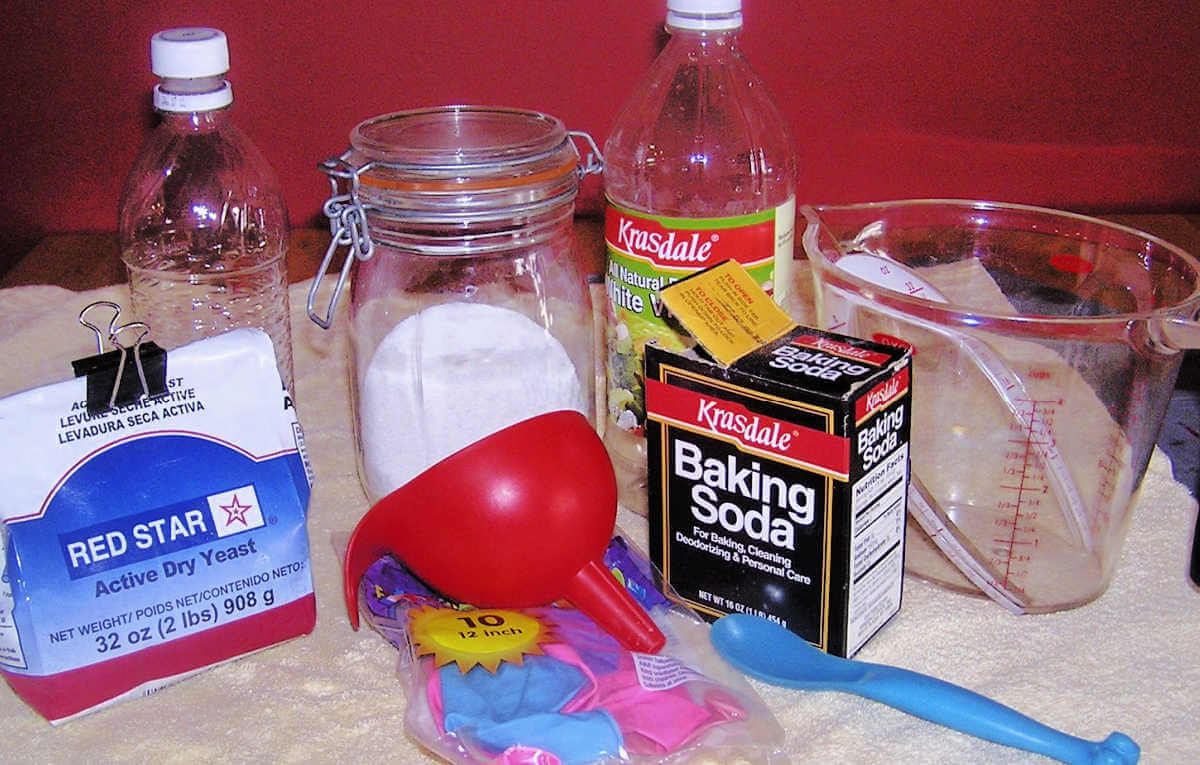
Supplies
- Yeast. We used standard dry yeast available at any grocery store
- White sugar
- Measuring cup
- Spoon
- Plastic bottle
- Balloons
- Funnel
- Water
You'll also want a towel to protect your work surface and facilitate clean up!
Instructions
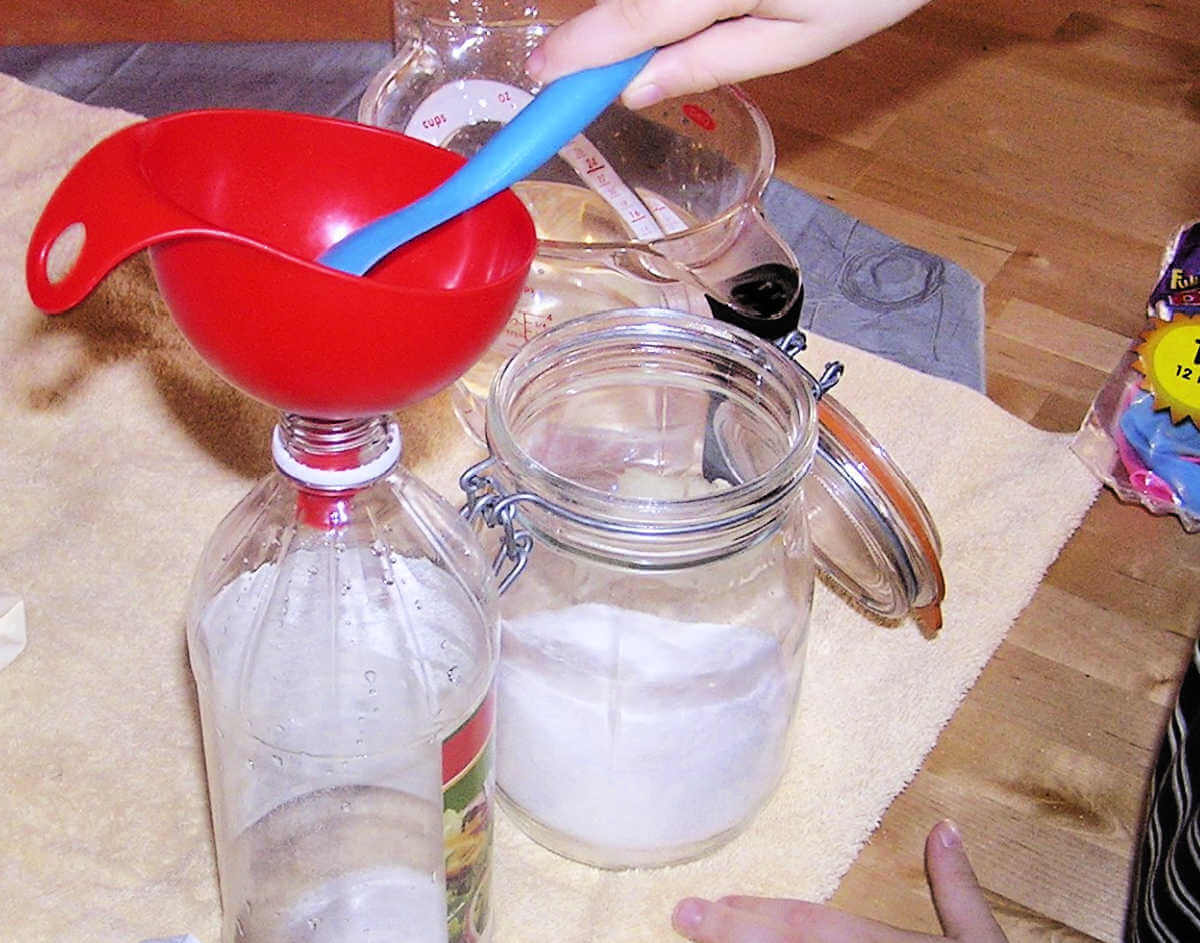
Use the funnel and scoop two spoonfuls of sugar into a plastic bottle.
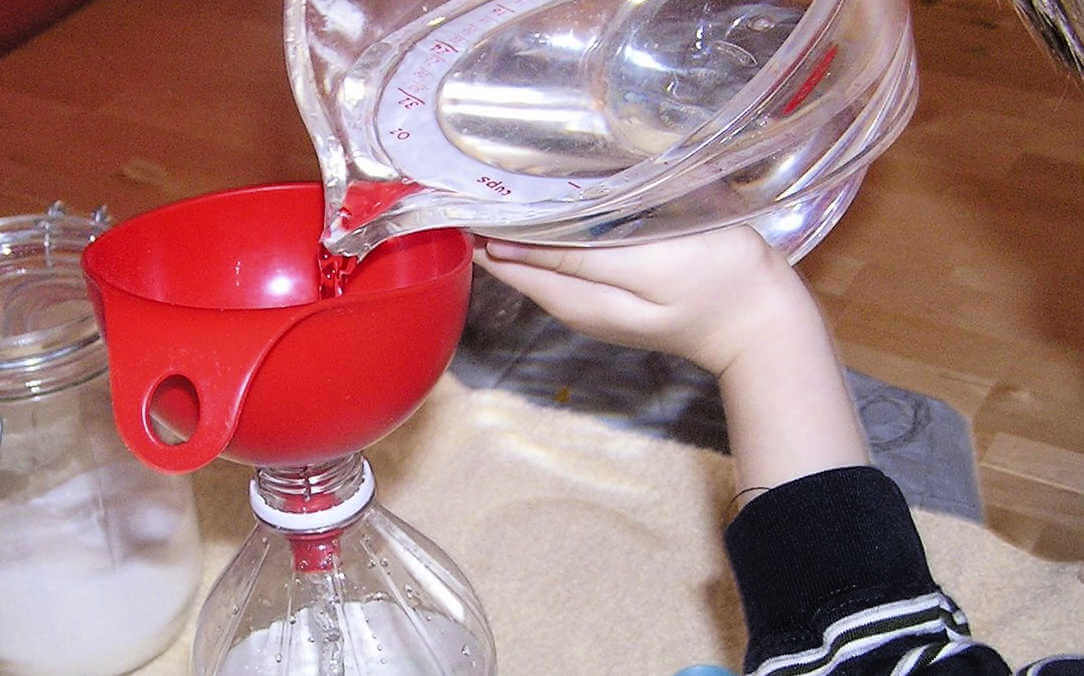
Leaving the funnel in place slowly pour water into the bottle until it is about three quarters full.
Next, add several spoonfuls yeast. It's helpful to leave the funnel in place. We didn't measure out the yeast to any specific quantity. It's helpful to dry the funnel before adding the yeast.
Two heaping spoons is plenty and when mixed with the sugar will produce enough carbon dioxide to have an effect on the balloon.
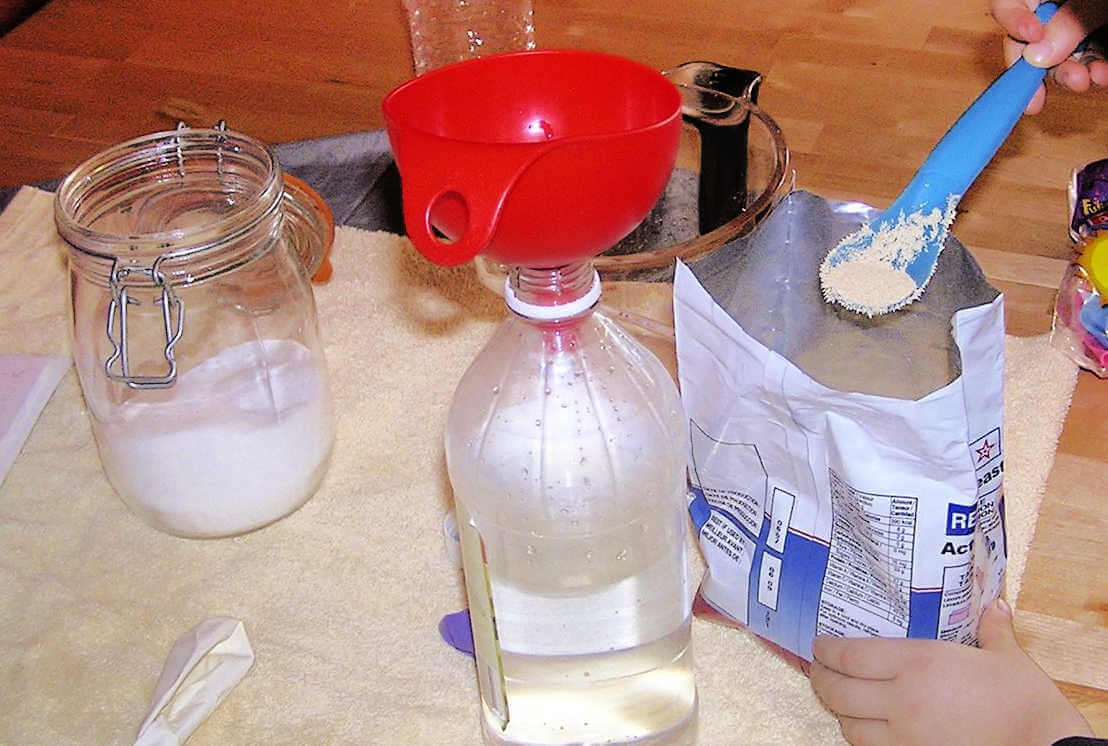
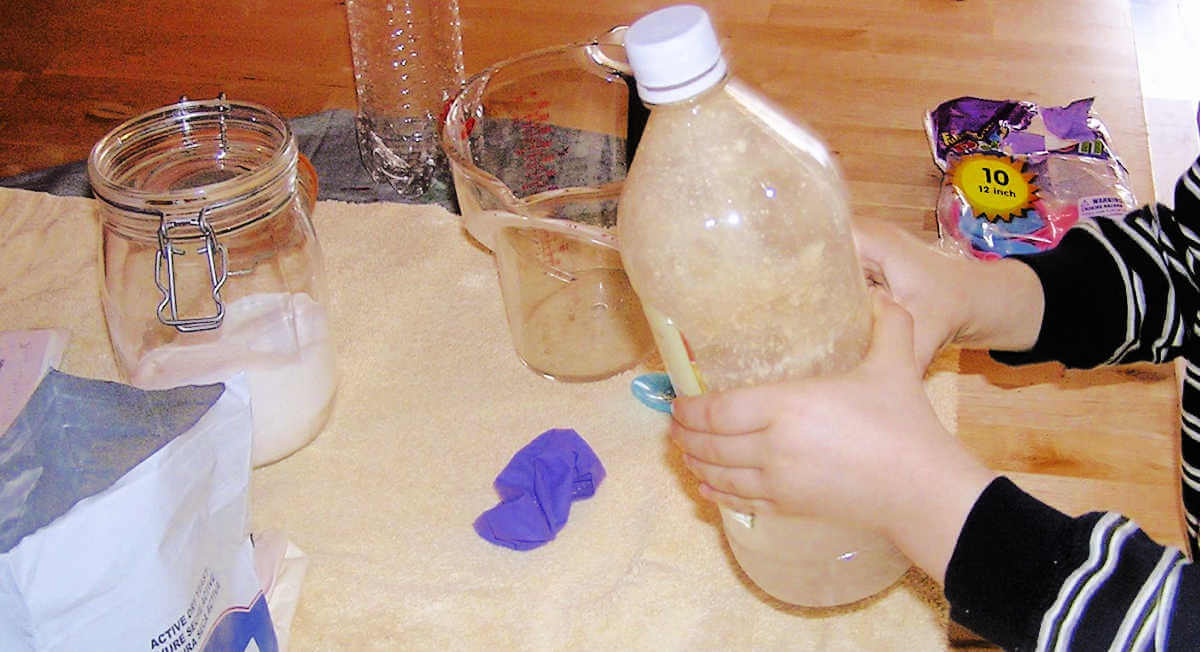
The next step is fun for all kids! Tighten the cap on the plastic bottle and then shake vigorously! If you've done shaken container painting with your kids, you know they love to shake things that make noise!
Finally, remove the cap from the bottle and stretch the base of the balloon tightly over the bottle's neck.
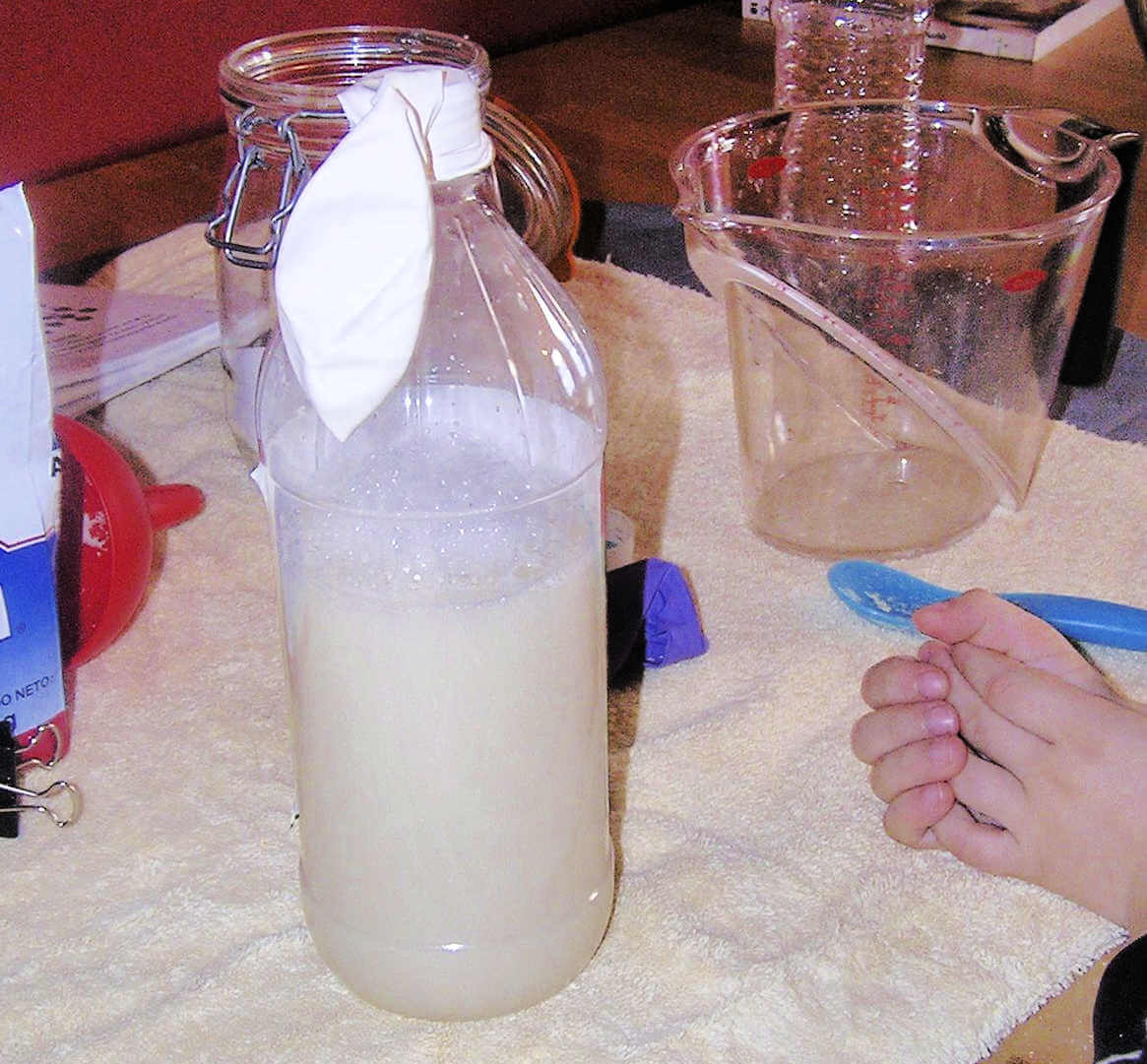
Now comes the hard part. Waiting!
Just as bread dough takes time to rise at room temperature, the yeast-sugar-water mixture will need time to produce the necessary gas to inflate the balloon. While you are waiting for the gas to develop, start the next balloon science experiment: inflation with vinegar and baking soda.
At the risk of losing my blog's G-rating, here is what the balloon looked like after about 30 minutes.
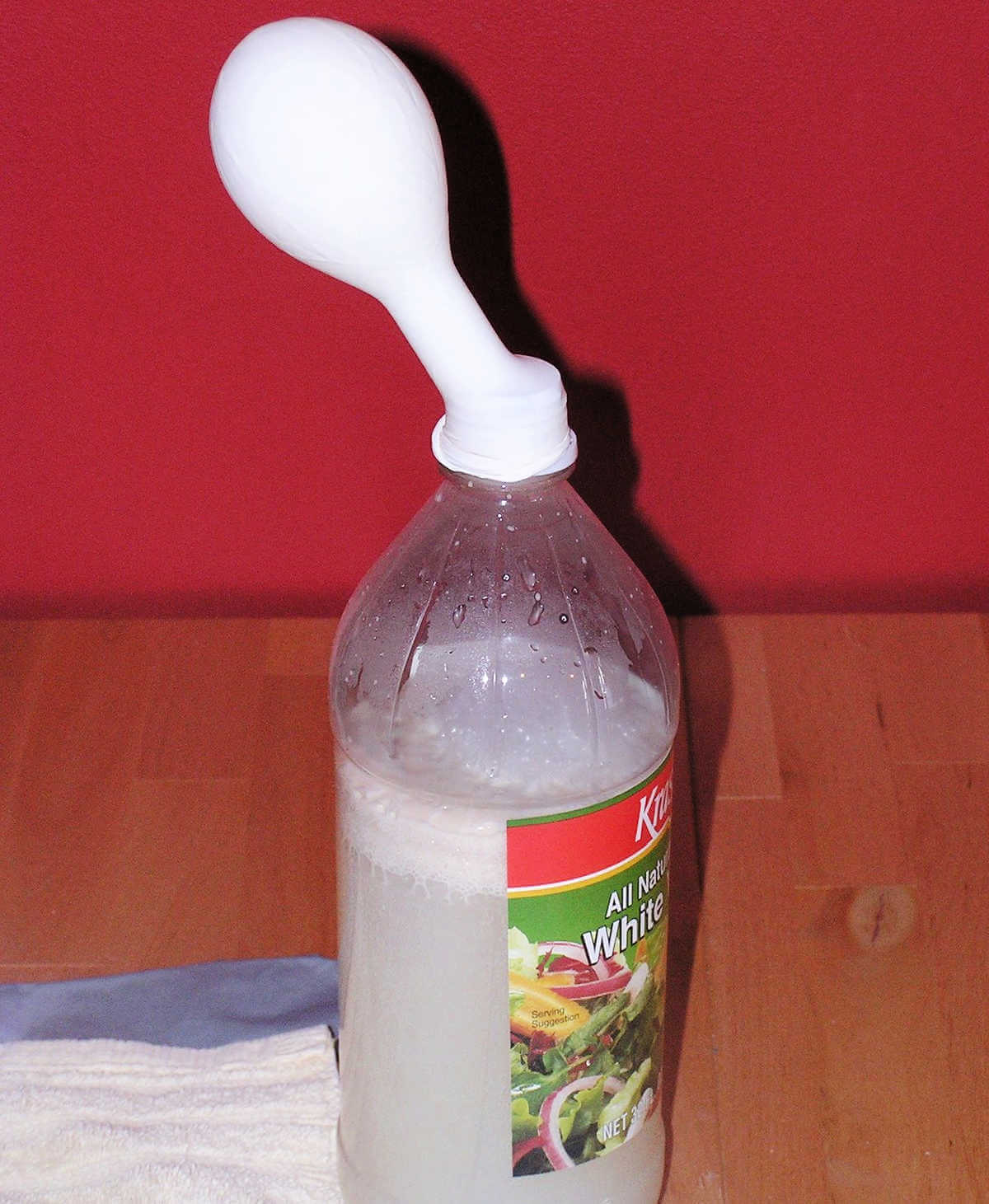
As you can see, it's not a huge inflation of the balloon, but the carbon dioxide gas did give the balloon some lift! If your child is disappointed with the results, remember that failure can help kids think like scientists.
Use leftover balloons for more science fun:
How to Blow up a Balloon with Baking Soda and Vinegar
This second balloon chemistry experiment is a little more dramatic than the yeast experiment. And what kid doesn't love a little drama?
Materials
- Plastic bottle
- Balloon
- Spoon
- Funnel
- White Vinegar
- Water
- Baking Soda
- Measuring cup for pouring (not for measuring)
Instructions
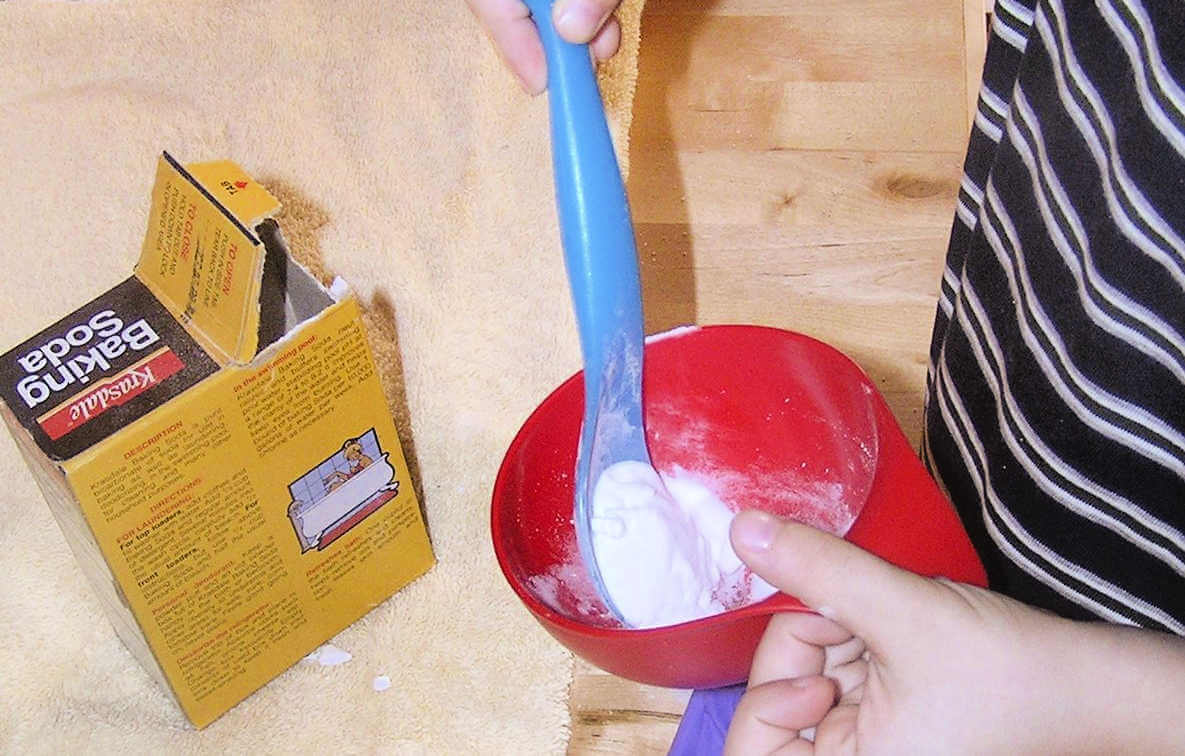
First, place the funnel in the neck of the deflated balloon. Scoop baking soda into the funnel and shake down into the balloon. You'll want to fill the balloon with as much baking soda as possible.
The baking soda might block the opening of the funnel if you put too much in at one time. If necessary, use a toothpick to break up the clumps and help it pass through.
Next, pour some about a cup of vinegar into the bottle. Exact measurements are not necessary. Save some of the vinegar for the cabbage juice indicator experiment, next!
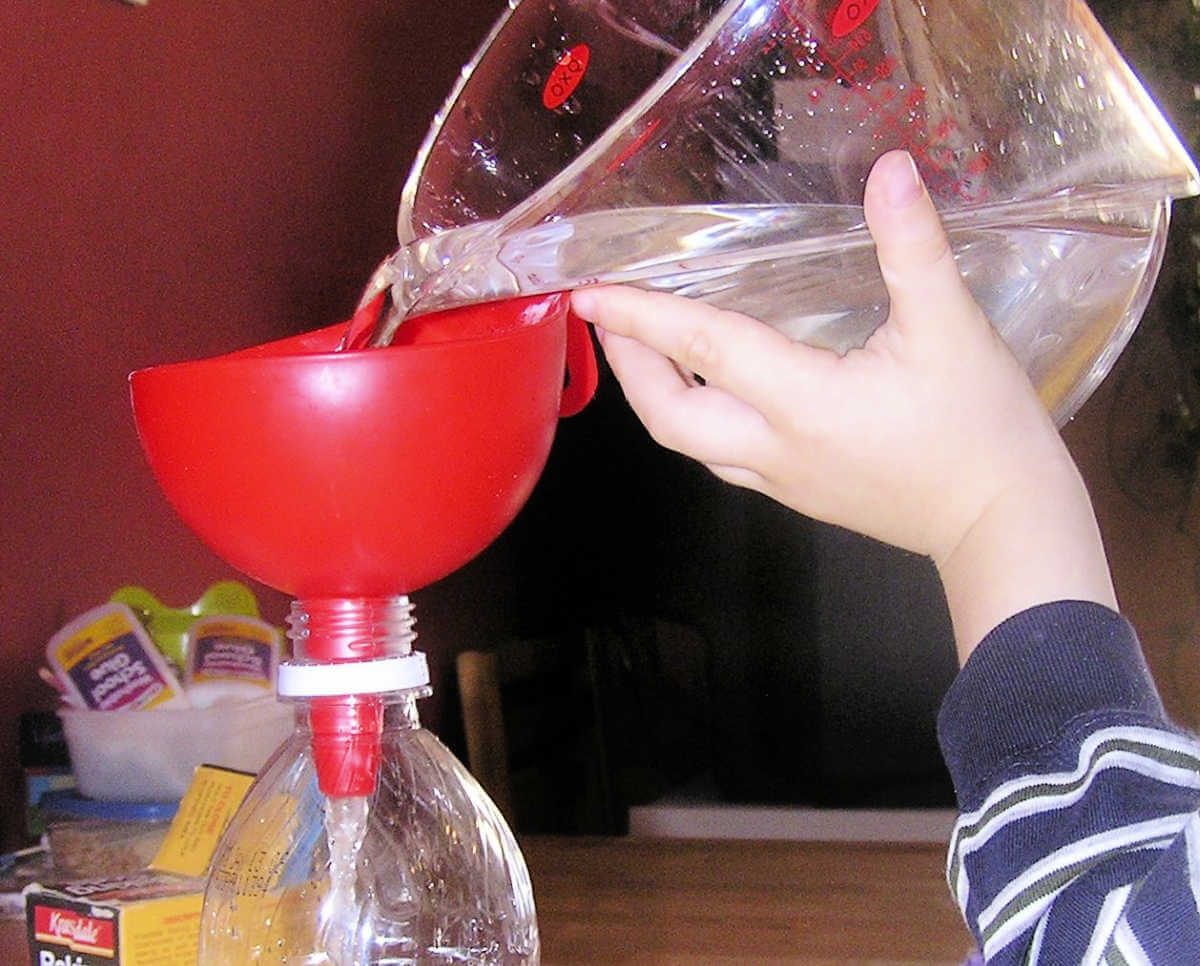
Add some water to the bottle so that it is about two-thirds to three-quarters full. You want to raise the level of liquid so that the gas reaches the balloon instead of staying in the bottle.
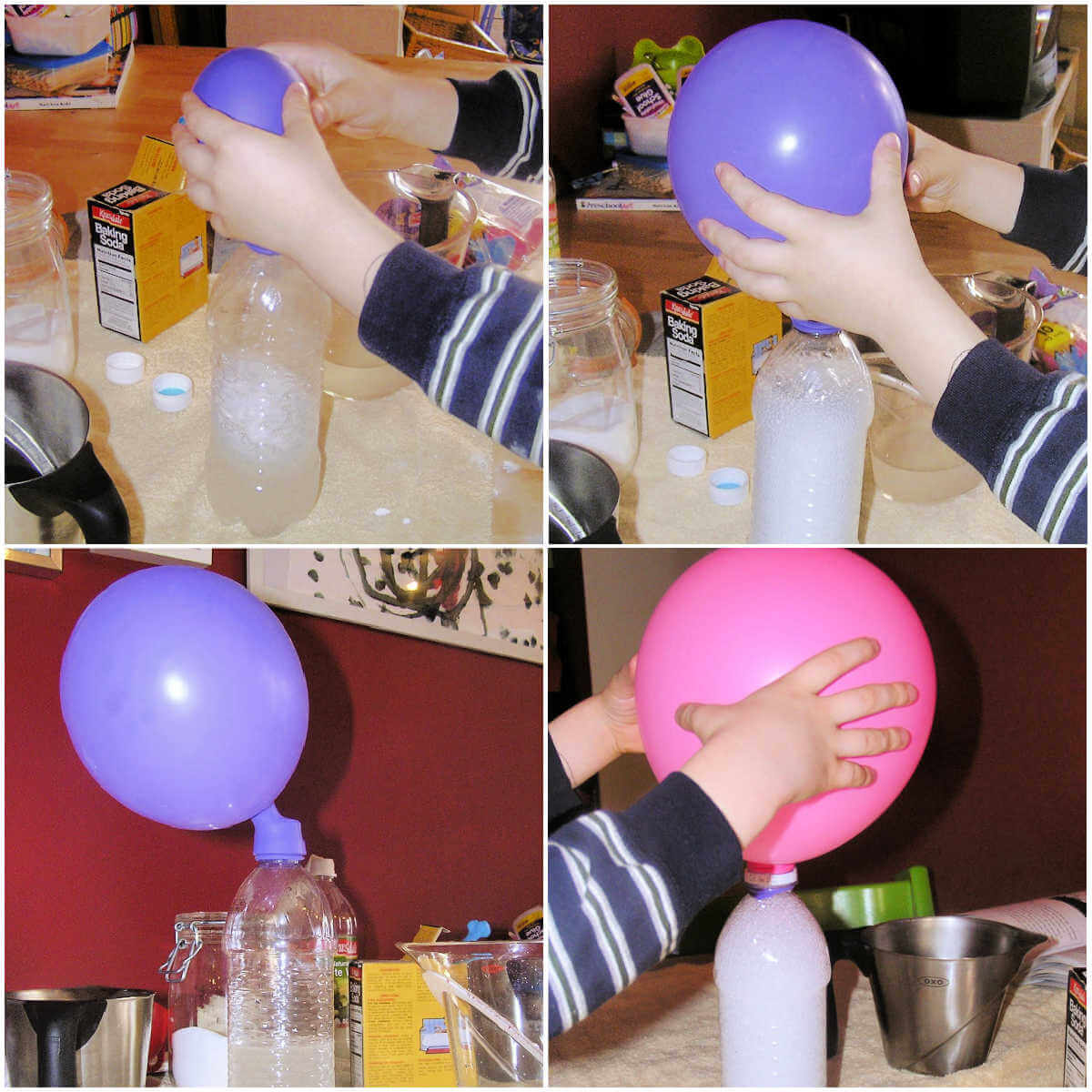
Finally, carefully place the baking soda filled balloon on the neck of the bottle and hold the balloon straight up so that the soda falls into the bottle.
Immediately, the balloon will begin to inflate. Bigger, bigger, bigger!
This is a very satisfying indoor activity for a preschooler (like my four year old) or older child who loves to watch dramatic action and reaction! Some preschoolers may enjoy talking about the science behind the experiment, but even if they don't they are still learning something!
And some little scientists might just like to play with vinegar and baking soda in a preschool science lab or an exploding toy car wash, making a big bubbling, oozing and fizzing mess! That's good too. All in the spirit of getting through the day with your kids.
DON'T MISS: 10 Easy After School Science Experiments for Kids

Raising a Happy Child says
The difference between yeast and vinegar is rather dramatic! I have to look for some books you recommend.
TP Craft says
This is a great idea. We made a volcano last year using the baking soda and vinegar. It was so much fun.
An Amazing Child says
I really love all the science activities you do. They are so wonderfully hands-on. I try to do some tiny science with my little man (he's not quite two) and its always lots of fun.
S.AJ says
I really liked your post was really fun reading it...no wonder experimenting it must have been even more!
Anonymous says
great
Candice says
How can you explain to children why that happened when putting soda and vinegar together?
Erica MomandKiddo says
The chemical reaction creates a gas that inflates the balloon.